
Rehabilitation Activities
The restoration of nature, or rehabilitation, encompasses all phases of mining activities: the Environmental Impact Assessment (EIA) period, construction, operational phase, and closure. For rehabilitation to be sustainable and effective, each of these four phases must be managed in line with their intended objectives. Türk Altın İşletmeleri Inc. adheres to these four fundamental elements to ensure high-quality restoration across all its mining operations.
Prior to commencing mining, Türk Altın İşletmeleri Inc. conducts a robust EIA process that includes baseline environmental data. These reports identify soils, plant diversity, and other factors essential for rehabilitation. When necessary, seeds of specific species identified by experts are collected from the site and stored in public institutions for use during the rehabilitation phase. During land preparation, these species are collected and relocated, and topsoil is stored according to standards for later use in restoration.
Through its sustainable mining practices, Türk Altın İşletmeleri Inc. demonstrates that gold mining and environmental protection can coexist under optimal conditions, without adverse impacts on human health, the environment, or local agriculture. To accelerate rehabilitation under the Mine Closure Plan and reduce the workload during closure, restoration activities begin in areas where mining has ceased or where no operations are planned.
The operational phase marks the active start of restoration efforts. In areas where mining activities are completed, rehabilitation begins as defined in the EIA and continues through the closure phase until objectives are achieved. The company’s approach to nature restoration is integrated into its Environmental Policy and Environmental Management System.
Key objectives of the company’s rehabilitation works include:
- Restoring mined open-pit areas to a natural appearance close to their original state,
- Maintaining a green and sustainable environment,
- Minimizing erosion,
- Increasing atmospheric oxygen by planting trees on the site,
- Reducing dust from mining activities,
- Promoting new agricultural opportunities for local communities,
- Ensuring rehabilitated areas can be used for various purposes post-mining,
- Restoring flora and fauna populations,
- Creating more green areas and fewer areas requiring rehabilitation as the mine approaches closure.
Ovacık Gold Mine
Since 2005, rehabilitation efforts at Ovacık Gold Mine have been carried out alongside mining activities. Pine and olive saplings have been planted on waste rock and open-pit embankments, yielding both cultivated crops and natural vegetation establishment. These efforts exemplify early rehabilitation, significantly reducing the duration of closure-phase works.
Mining is a temporary use of land. Following restoration, mined areas can be returned to agricultural or livestock use, with Ovacık Gold Mine serving as a prime example.
A separate rehabilitation program is ongoing at the primary waste storage facility, which has been dewatered and prepared for fill works following engineering studies by an international expert firm. Fill works have been completed, and vegetation planting is underway. Landscaping around administrative and technical structures is also included in the rehabilitation process.
Çukuralan Gold Mine
Ore extraction at Çukuralan is conducted via open-pit and underground methods, with processing at Ovacık Gold Mine. After stabilizing open-pit benches, red pine trees were planted and thrived, providing valuable data for final rehabilitation. Completed rehabilitation areas have been handed over to the relevant Forestry Directorate. Additionally, landscaping works covering 595 m² have been carried out, including grassing and environmental landscaping.
Havran Gold Mine
At Havran Gold Mine (Büyükdere and Küçükdere, Havran, Balıkesir), open-pit mining produced ore from November 2006 to March 2010. Approximately 3.5 million m³ of excavation yielded 1.7 million tons of ore, transported to Ovacık Gold Mine for dore bar production. Backfilling of mined areas was completed in November 2010.
Rehabilitation began on September 2, 2010, and was completed on March 22, 2011. Tree species were selected to provide economic benefits to the region, resulting in the planting of 2,476 Ayvalık Olive saplings. Forested areas impacted by mining were restored and handed over to the Havran Forestry Directorate. Under Directorate supervision, a total of 33,733 saplings were planted, including red pine, oleaster, ash, stone pine, and black locust. Today, the site serves as a local honey forest, exemplifying successful rehabilitation.
Mastra Gold Mine
Rehabilitation at Mastra Gold Mine has progressed alongside mining operations. The waste storage embankment and waste rock areas have been revegetated in harmony with natural vegetation, and walnut trees were planted to provide future economic benefit. Production has concluded, and final closure preparations are underway.
Key restoration efforts included filling open pits with waste rock to restore pre-mining topography. Due to topographical and meteorological challenges, topsoil protection and selection of suitable plant species were critical. The reuse of stored topsoil remains a cornerstone of effective rehabilitation.
Kaymaz Gold Mine
In accordance with sustainable mining criteria and the Mine Closure Plan, rehabilitation has begun in all areas where no mining activities will take place. Works are conducted following the Environmental Policy, internal procedures, and prior experience to ensure optimal outcomes.
Himmetdede Gold Mine
Mining preparations at Himmetdede Gold Mine began in 2013. Backfilling was performed in northern pits, and partial backfilling in southern pits maintained slope and road stability.
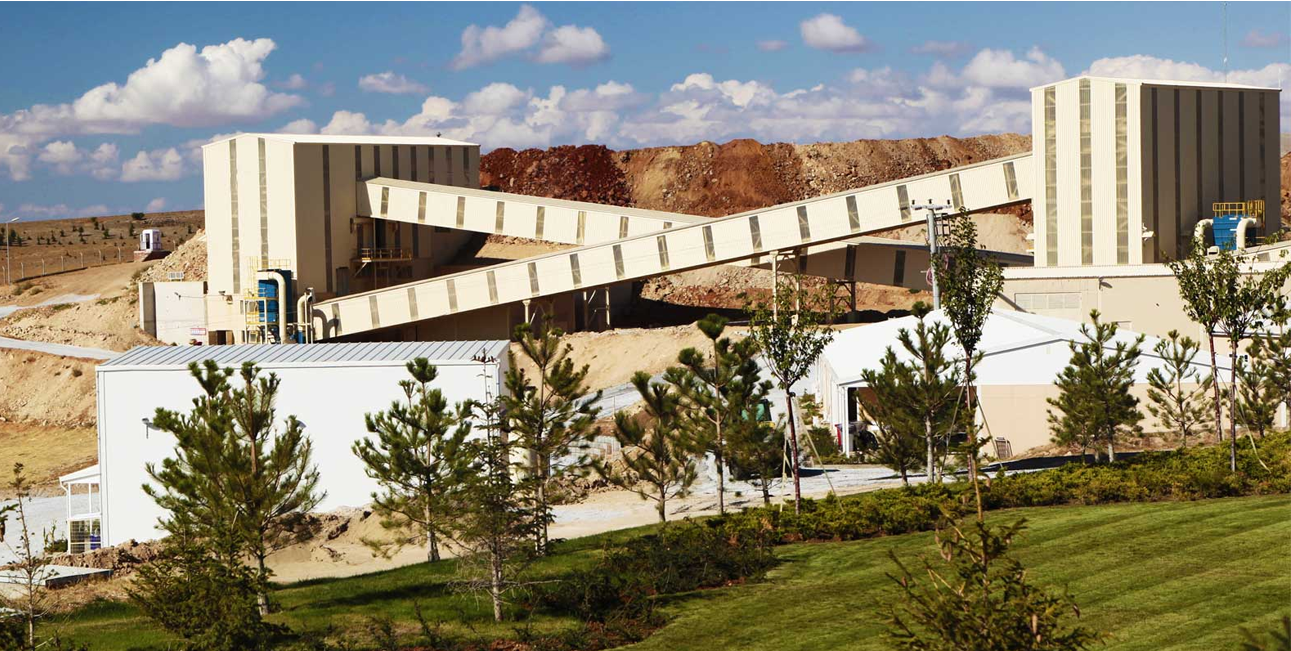
Under the soil protection project approved by the Kayseri Provincial Agriculture Directorate, approximately 6,722 coniferous, deciduous, and fruit trees were planted along and outside the site boundary, with 901 ornamental plants added. Landscaping also included a 13,000 m² lawn area and planting of various ornamental species.
.png)